 Save
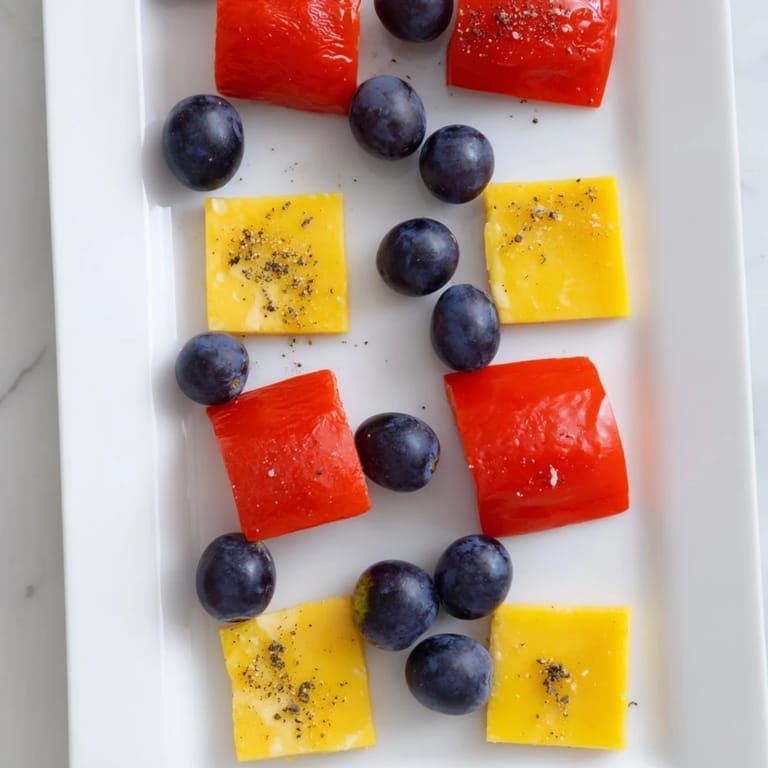
Save I discovered this dish at a gallery opening where the appetizers were arranged as carefully as the artwork on the walls. The artist's eye for color and composition had me mesmerized, and when I tasted those geometric blocks of pepper, cheese, and grapes, I realized how food could be both beautiful and delicious at once. That night, I went home determined to recreate the magic in my own kitchen, and what started as an attempt at visual art became my favorite quick appetizer to impress people without breaking a sweat.
I'll never forget my friend Marcus asking if I'd studied graphic design when he saw this on my platter. He was so convinced of its complexity that he couldn't believe I'd made it myself, and honestly, that's when I knew I'd nailed something special. The confidence I felt watching people photograph their plates before eating them was worth every perfectly cut cube.
Ingredients
- 1 large red bell pepper: Look for ones that are firm with thick walls—they cut cleaner and their sweetness balances the richness of cheese beautifully.
- 120 g yellow cheddar or Gouda: The firmness here matters since you're cutting blocks; softer cheeses crumble and lose that architectural integrity, so grab something with real structure.
- 24 blue or black seedless grapes: These provide the unexpected contrast that makes people pause and appreciate the thought behind the arrangement, plus their slight tartness keeps things from feeling too heavy.
- 1 tbsp extra-virgin olive oil (optional): A light brush adds a subtle richness to the peppers without overwhelming their natural sweetness, though the dish stands beautifully without it.
- Sea salt and freshly ground black pepper: Don't skip the grinding—the texture and aroma of freshly cracked pepper elevates even the simplest ingredients.
Tired of Takeout? 🥡
Get 10 meals you can make faster than delivery arrives. Seriously.
One email. No spam. Unsubscribe anytime.
Instructions
- Prep your palette:
- Wash and dry your red bell pepper thoroughly, then slice it into strips about an inch wide. Now comes the meditative part—cut those strips into neat 1-inch squares, taking your time to keep them uniform so your final arrangement looks intentional rather than rushed.
- Cut your cheese with precision:
- Slice your cheese into blocks that match the dimension of your pepper squares, around 1-inch rectangular pieces. The uniform sizing is what tricks the eye into seeing this as carefully composed rather than casually assembled.
- Rinse and ready the grapes:
- Give your grapes a gentle rinse under cool water and pat them completely dry so they catch the light like tiny jewels when they're arranged.
- Compose your masterpiece:
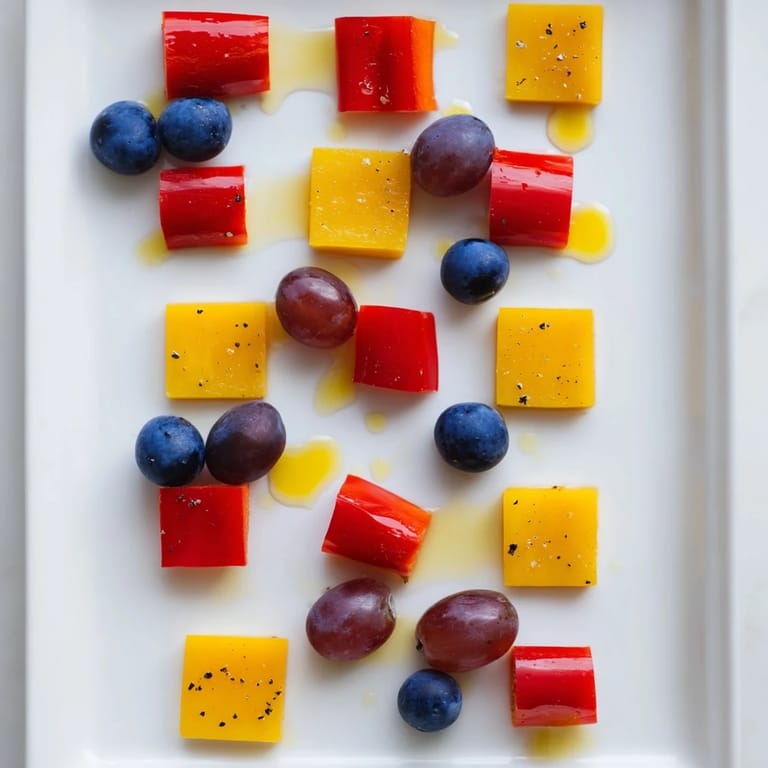
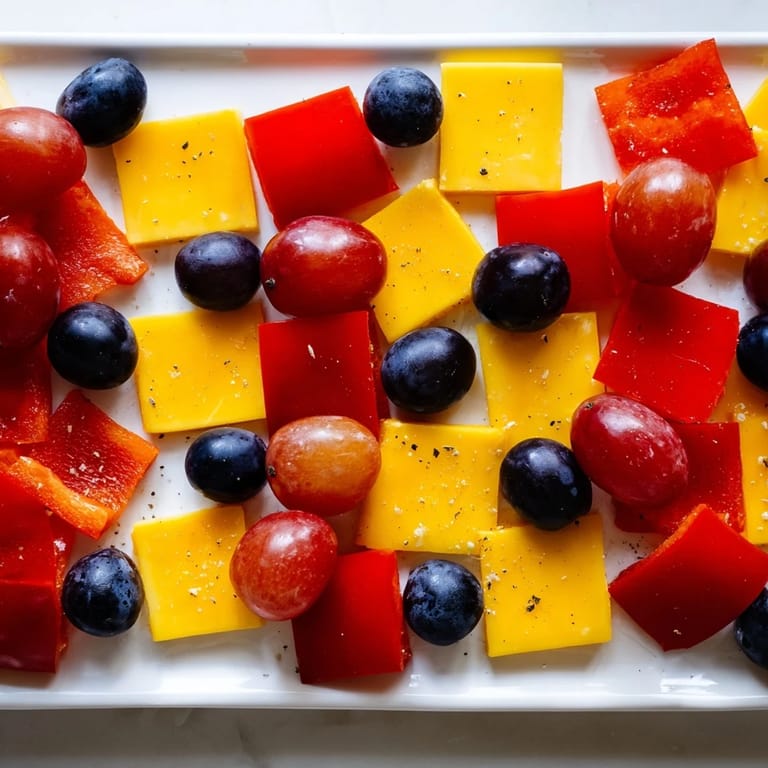
- On a rectangular serving platter, start laying out your elements in a grid pattern—think checkerboard or alternating blocks of color. Red pepper, yellow cheese, blue grapes, then repeat; let the pattern guide you rather than overthinking it, and trust that the color contrast will do most of the visual work.
- Season and finish:
- If you're using the olive oil, brush it very lightly over the pepper pieces, then whisper a pinch of sea salt and a few grinds of black pepper across the whole arrangement. The optional touch here adds flavor without masking the purity of each ingredient.
- Serve with intention:
- Bring this to the table immediately while everything is at its freshest, or chill it for up to 30 minutes if you need to prep other things—it actually tastes even better after a brief rest in the cold.
 Save
Save There was this moment when my mother, who usually critiques my cooking with surgical precision, simply said it was too beautiful to eat and took a photo to show her book club. I realized then that this wasn't just about flavor or ease—it was about creating something that made people feel seen and thoughtful, even if it had taken me fifteen minutes.
The Geometry of Good Taste
Bauhaus taught us that form and function aren't opposites but partners, and this dish lives by that principle. The arrangement isn't decoration masking mediocrity; it's the natural result of choosing quality ingredients and treating them with respect. When you cut your cheese and peppers with care, you're not being fussy—you're setting yourself up to create something that works because every element is in its right place, doing exactly what it's meant to do.
Variations That Keep It Interesting
The beauty of this recipe is that it begs for experimentation without losing its soul. Once you've mastered the basic color blocking, you can introduce orange bell peppers, white mozzarella, or even pickled vegetables for those who like a sharper note. I've found that the core principle—unified colors arranged with intention—holds strong no matter which ingredients you swap in, so feel free to play with what's in season or what calls to you at the market.
Pairing and Presentation Secrets
Serve this alongside a dry white wine like Sauvignon Blanc, which cuts through the richness of the cheese and complements the natural sweetness of both the grapes and peppers. If your guests are bread people, set out some thinly sliced sourdough or crispy crackers on the side so they can build their own bites if they choose. The geometry stays stunning whether people eat it as is or layer it onto something else, and that flexibility is part of what makes it work in any hosting situation.
- For a vegan version, use plant-based yellow cheese that has the same firmness and holds its shape when cut into blocks.
- Chill the platter for 15 to 30 minutes before serving so the cheese firms up and the flavors meld slightly.
- Remember that this is best eaten within a couple of hours, so plan accordingly if you're making it ahead.
 Save
Save This dish reminds me that the best recipes are often the simplest ones, the ones that respect their ingredients instead of competing with them. Serve it with confidence and watch how something so straightforward becomes the most memorable thing on your table.