 Save
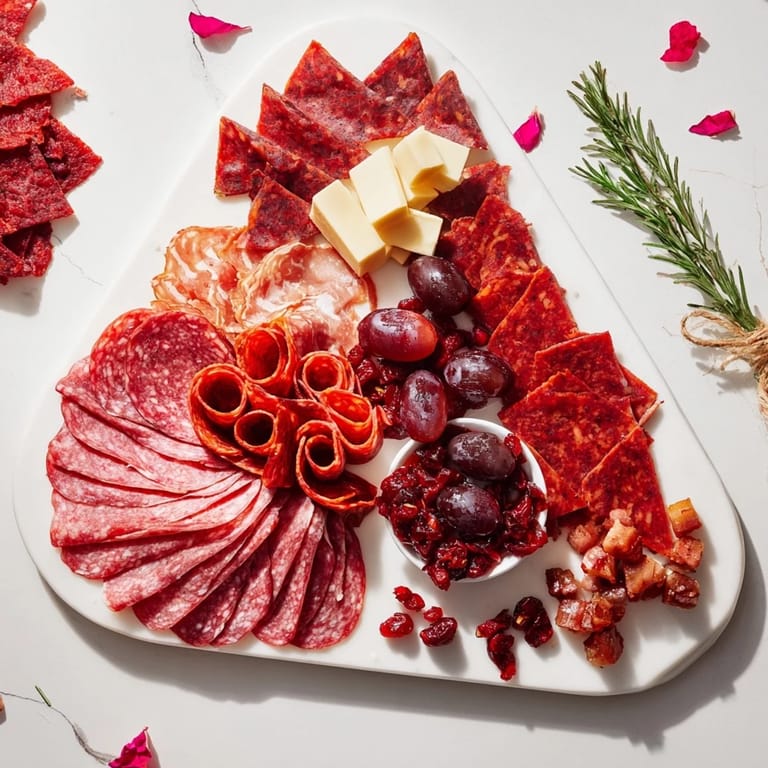
Save The first time I assembled a board that felt truly luxurious, I wasn't thinking about perfection—I was thinking about my friend Marco, who'd just spent three months in Italy and wouldn't stop talking about the charcuterie he'd discovered in small village markets. I wanted to capture that same sense of discovery on a platter, so I started layering deep crimsons and burgundies: prosciutto, bresaola, wines that had seeped into cheese. What surprised me was how the colors alone told a story before anyone even tasted anything.
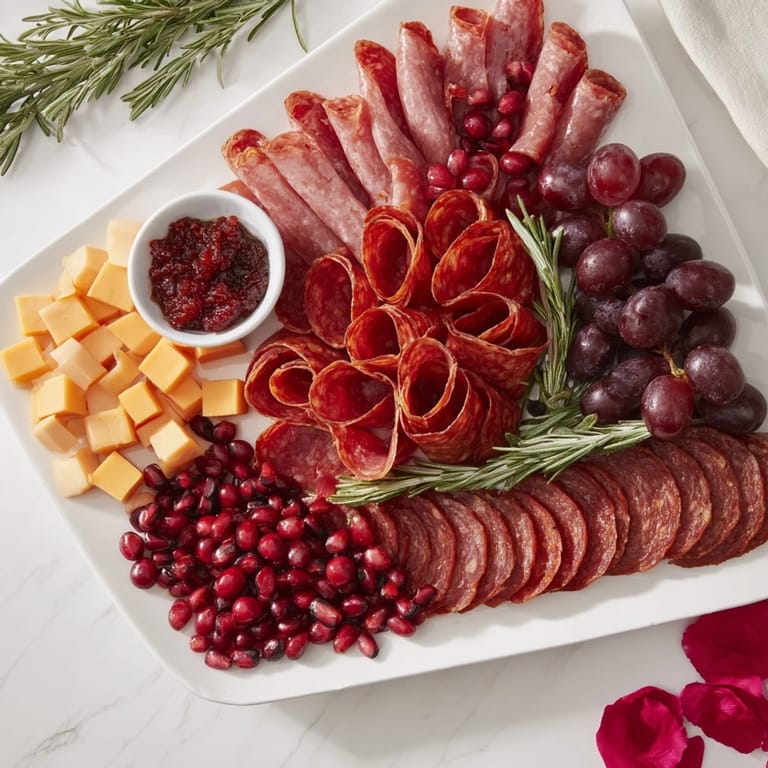
I remember my hands shaking a little bit when I first arranged this for a dinner party, worried the flavors wouldn't hold together. But something magical happened when people gathered around: the pomegranate seeds caught the light, the rosemary released its smell into the air, and suddenly everyone slowed down. They actually paused before eating, which almost never happens at parties.
Ingredients
- Prosciutto (100 g): Slice it thin and let it breathe—folding it creates edges that crisp up slightly, adding texture that transforms a simple board into something tactile.
- Bresaola (100 g): This air-dried beef brings an earthy depth; the deep red color is half the visual appeal, so don't hide it under other items.
- Spicy chorizo, thinly sliced (100 g): The oils from chorizo will stain everything around it beautifully, so use that—lean into the color.
- Smoked beef salami (80 g): Adds a subtle smokiness that keeps the board from feeling one-note, almost like a bass note in music.
- Drunken Goat cheese, sliced (150 g): The wine infusion makes this creamy and slightly tangy; when it warms to room temperature, it becomes almost spreadable on crackers.
- Red Wine Cheddar, cubed (150 g): The sharpness cuts through the richness of the meats like a conversation partner who keeps you honest.
- Merlot BellaVitano, sliced (100 g): This one's a wildcard—it's nutty, slightly sweet, and adds complexity that makes people ask what it is.
- Red grapes, washed (1 small bunch): They provide juiciness and sweetness that cleanses your palate between bites of rich meats and cheeses.
- Pomegranate seeds (1 medium pomegranate): Each seed is like a tiny flavor bomb; they add brightness and a pop of color that catches light like jewels.
- Red onion jam (1 small jar): The jammy sweetness and slight tang deserve their own moment—don't bury this in the corner.
- Roasted red peppers, sliced (1 cup): They bridge the gap between vegetables and sweetness, softer than raw peppers and more forgiving if someone's not in the mood for crunch.
- Dried cranberries (1 small handful): Tart and chewy, they scatter like garnish but actually anchor flavor clusters.
- Baguette, sliced (1 baguette): Toast the slices lightly if you want them to hold up better; leave them soft if you want them to soak up jam.
- Red beet crackers (1 box): They carry the color theme and taste slightly earthy, which pairs unexpectedly well with wine-soaked cheese.
- Fresh rosemary sprigs: Don't skip this—the aroma is part of the experience, signaling elegance before anyone takes a bite.
- Edible rose petals, optional: These are pure theater, and sometimes theater is exactly what makes a meal memorable.
Tired of Takeout? 🥡
Get 10 meals you can make faster than delivery arrives. Seriously.
One email. No spam. Unsubscribe anytime.
Instructions
- Set Your Stage:
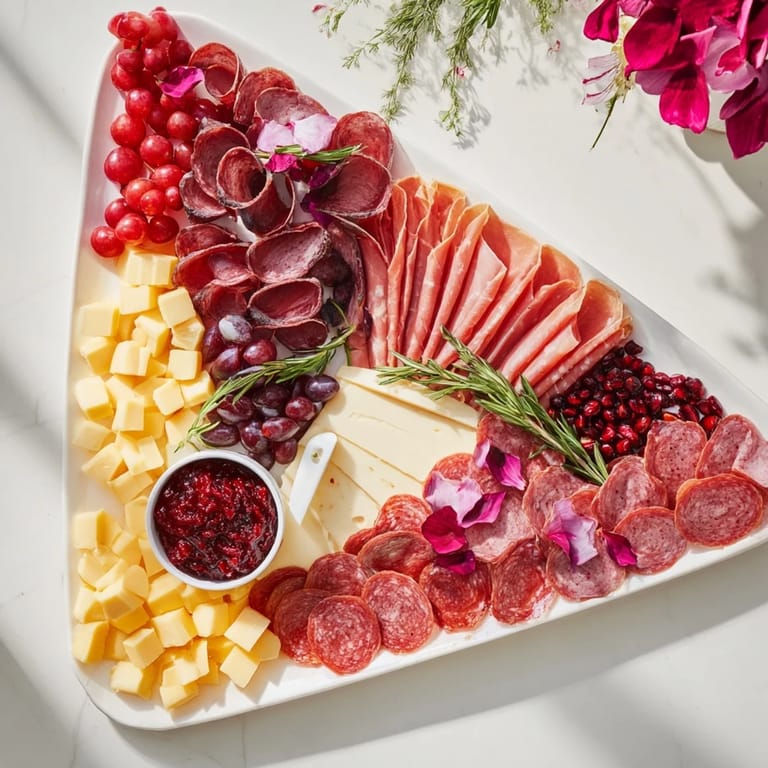
- Start with a clean, dry board because moisture is the enemy of charcuterie—any dampness will make everything taste muted. Use a large triangular board because the shape naturally guides the eye and creates visual flow.
- Arrange Your Meats First:
- Fold or roll the prosciutto loosely so it catches light; arrange bresaola in a loose fan; let chorizo and salami overlap slightly to show off their colors. Keep textures separate so each meat gets its moment.
- Fan Out the Cheeses:
- Cut them into different sizes—some cubes, some slices—so the board doesn't look too uniform. The Drunken Goat should be placed where people will find it early, because once they taste it, they'll come back for more.
- Scatter Your Accents:
- Drop pomegranate seeds, grapes, and cranberries into pockets and gaps—they're not filler, they're punctuation marks that break up the richness. Place the red onion jam in a small bowl so people can actually use it.
- Build the Bridge:
- Arrange roasted red peppers near the cheeses and jams; they create visual and flavor transitions that make the board feel cohesive rather than random.
- Fill the Gaps:
- Lean the baguette slices and beet crackers at angles to suggest movement and generosity. Don't overthink it—some asymmetry is more inviting than perfection.
- The Final Touch:
- Tuck rosemary sprigs between ingredients so they nestle naturally, and scatter rose petals across the board like you weren't trying too hard. Serve at room temperature so every flavor can actually speak.
 Save
Save There's a moment I always wait for at the start of a dinner when someone leans over this board, pauses, and just breathes in the rosemary. That's when I know it's going to be one of those meals where everyone actually talks to each other instead of scrolling through their phones.
The Wine Pairing Moment
This board isn't just food; it's a conversation starter with a wine glass in your hand. A bold Cabernet Sauvignon will stand up to the spiced chorizo and cut through the creamy Drunken Goat like it's meant to. Malbec brings something earthy that makes the aged cheeses taste even more complex. The beauty is that this isn't fussy—it's just about finding a wine you actually enjoy and letting it guide the tasting experience.
Why This Board Actually Works
I've learned that a great charcuterie board isn't about having the most expensive ingredients or the fanciest arrangement. It's about balance: the saltiness of the meats needs sweetness somewhere nearby, the richness needs brightness, and the textures need contrast. When you nail that balance, people don't just eat—they discover. Every bite becomes a small moment of exploration.
Making It Your Own
The beauty of a board like this is that it's a framework, not a rule book. If you find a red wine-soaked blue cheese that speaks to you, use it. If you prefer manchego over the BellaVitano, go for it. The red theme is just a starting point for creativity. What matters is that you build something that makes you excited to pour a glass of wine and gather people around.
- Substitute gluten-free crackers if you need them—the board actually looks more sophisticated with variety in cracker textures and colors.
- Add fresh figs or sliced pears if they're in season; they'll add unexpected sweetness that plays beautifully against the savory and wine-forward flavors.
- Don't stress about edible rose petals if you can't find them; the rosemary alone creates the elegance, and the petals are just a secret bonus.
 Save
Save This board is the kind of thing that reminds me why I cook at all—not because I'm trying to prove anything, but because there's real joy in watching people slow down and savor something beautiful. It's luxurious without being pretentious, simple without being boring.
Kitchen Guide
- → What types of meats are featured in The Crimson Crest?
It includes prosciutto, bresaola, spicy chorizo, and smoked beef salami, carefully arranged for texture variety.
- → How are the cheeses prepared for this board?
Cheeses like Drunken Goat and Merlot BellaVitano are soaked in red wine and sliced or cubed into bite-sized pieces.
- → What accompaniments enhance the flavor?
Fresh red grapes, pomegranate seeds, dried cranberries, roasted red peppers, and red onion jam add sweetness and tang.
- → Are there any suggested garnishes?
Fresh rosemary sprigs and edible rose petals provide aroma and visual appeal to the arrangement.
- → What is the best way to serve The Crimson Crest?
Serve immediately at room temperature to maximize the flavor and texture of meats and cheeses.