 Save
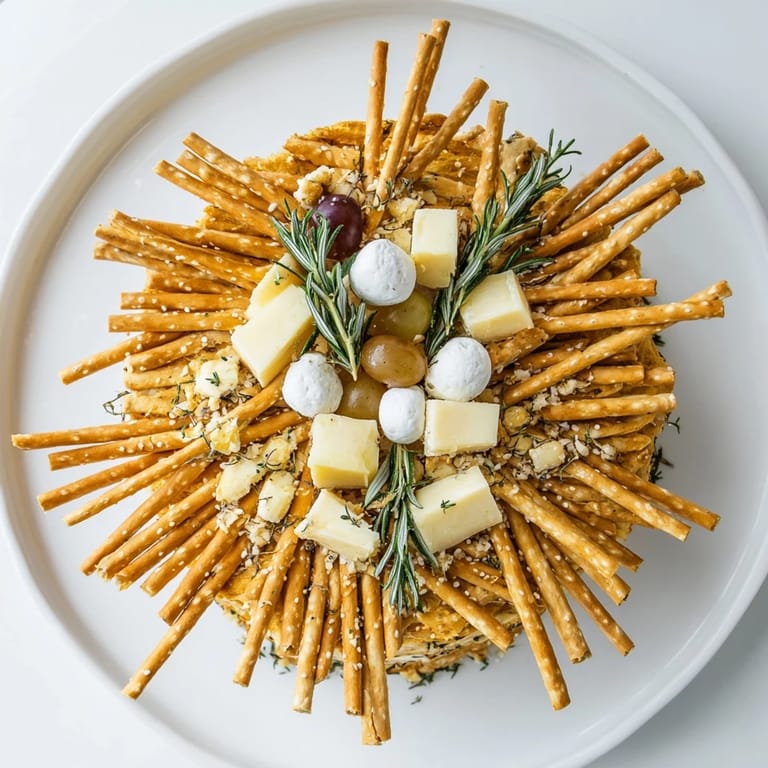
Save I discovered The Gilded Cage while watching a cooking show late one evening, mesmerized by how something so dramatic could emerge from such simple components. The host carefully curved golden breadsticks around a mound of carefully selected cheeses, and I knew immediately I had to recreate it for my next dinner party. There was something about the architecture of it—the playfulness of building with bread, the luxury of the cheese selection—that felt like edible theater. That night, I sketched the concept on a napkin, imagining how my guests would react when this elegant dome arrived at the table.
My first attempt was actually a minor disaster—I assembled the dome too early, and by the time guests arrived, the breadsticks had absorbed moisture from the cheese and gone slightly soft. The second time, I learned to have everything cold and ready to assemble just before serving, and the difference was transformative. Now, whenever I make this, I remember that moment of panic and laugh at how such a small timing adjustment made all the difference between a wilted dome and an architectural marvel.
Ingredients
- All-purpose flour: The foundation of your breadsticks—use good quality flour because these are meant to be the star, not just a vehicle.
- Instant dry yeast: This gives you enough rise in just 30 minutes, which is the beauty of working with a smaller batch.
- Lukewarm water: If it's too hot, you'll kill the yeast; too cold, and nothing will rise, so test it on your wrist like you're checking a baby's bath.
- Olive oil: This enriches the dough and creates those lovely golden tones when baked.
- Egg yolk glaze: Creates that beautiful shine and helps sesame seeds stick if you choose to use them.
- Triple-cream Brie: The soft, pillowy anchor of your cheese selection—it's forgiving and elegant.
- Aged Comté: Adds a nutty, caramel-like depth that prevents the board from feeling one-dimensional.
- Truffled goat cheese: The luxury element that makes people pause and ask what it is.
- Blue cheese: A small amount goes a long way to add complexity and salt balance.
- Parmigiano Reggiano: The shavings add visual appeal and a sharp accent that cuts through the richer cheeses.
- Red grapes: Not just decoration—they provide brightness and a palate cleanser between cheese bites.
- Honey or fig jam: A small drizzle transforms the entire experience, adding sweetness that's neither cloying nor out of place.
Tired of Takeout? 🥡
Get 10 meals you can make faster than delivery arrives. Seriously.
One email. No spam. Unsubscribe anytime.
Instructions
- Build your dough:
- Combine flour, yeast, sugar, and salt in a large bowl, then add the lukewarm water and olive oil. Mix until everything comes together into a shaggy dough, then knead for 8–10 minutes—your arms will tell you when it's ready, shifting from rough to smooth and springy.
- Let it breathe:
- Cover the bowl loosely with a tea towel and set it in a warm spot (a turned-off oven or sunny windowsill works beautifully) for 30 minutes. You'll watch it slowly puff up, nearly doubling in size—this is where the magic happens.
- Prepare your oven:
- Heat to 200°C (390°F) and line a large baking tray with parchment paper. This temperature is specific because it allows the breadsticks to cook through while developing a crispy exterior without burning the sesame seeds.
- Shape into sticks:
- Divide the dough into 18–20 pieces—don't overthink the size, consistency matters more than perfection. Roll each piece under your palms into a thin stick about 3 mm thick and 25 cm long, as if you're creating delicate golden pencils.
- Add shine and sparkle:
- Arrange breadsticks on your tray and brush each lightly with egg yolk, then sprinkle with sesame seeds if you're using them. This glaze creates that irresistible golden finish.
- Bake until golden:
- Bake for 15–18 minutes, turning the tray halfway through to ensure even browning. You'll know they're done when they're golden and crisp—they should feel light and hollow when you pick one up.
- Cool completely:
- This step is non-negotiable because warm breadsticks won't hold the dome structure. Set them aside on a cooling rack and resist the urge to taste-test immediately.
- Arrange the cheese foundation:
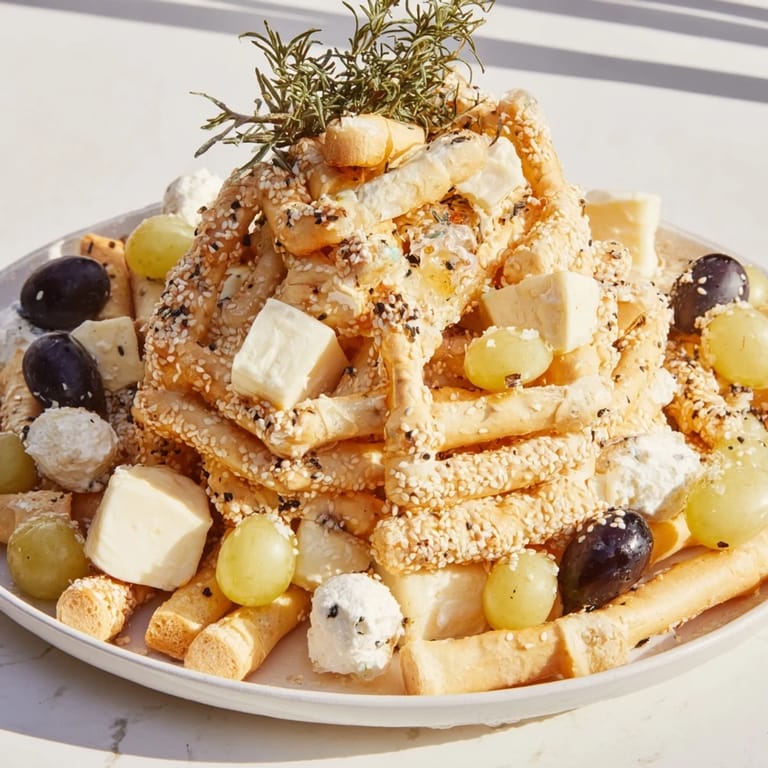
- On your serving platter, mound the cheeses in the center, mixing the different varieties so colors and textures are visible. Scatter grapes around the pile and add small drizzles of honey or jam, then tuck fresh herbs into the gaps.
- Build the dome:
- This is where patience becomes your ally—carefully lean breadsticks against the cheese pile, using them to support each other as you create a dome shape. If you need help, rest a small bowl on top of the cheese mound as a temporary guide while you arrange the sticks, then gently remove it once the structure holds.
 Save
Save There's a moment right before guests arrive when I step back and look at this creation sitting on the platter, and I'm struck by how something I made with my own hands looks like it belongs in a restaurant. One evening, my neighbor came over just as I was finishing the final touches, and she gasped—actually gasped—at the sight of it, and suddenly the entire reason I love cooking became clear again.
The Art of Cheese Pairing
Selecting cheeses for The Gilded Cage taught me that variety in texture, age, and intensity creates the most interesting experience. A soft cheese alone would feel one-dimensional, but adding aged Comté with its crystalline crunch, funky blue cheese with its complexity, and mild Brie with its approachability means every bite reveals something different. This principle has changed how I think about cheese boards entirely—it's not about quantity, it's about creating a conversation between flavors.
Breadstick Perfection
The first time I made these breadsticks, I overworked the dough, and they came out dense instead of crispy. Now I treat the kneading stage as meditation—just enough work to develop structure without toughening the gluten. The egg yolk glaze isn't just decorative; it protects the breadsticks from drying out while simultaneously creating that beautiful, appetizing shine that catches the light.
Serving and Presentation Magic
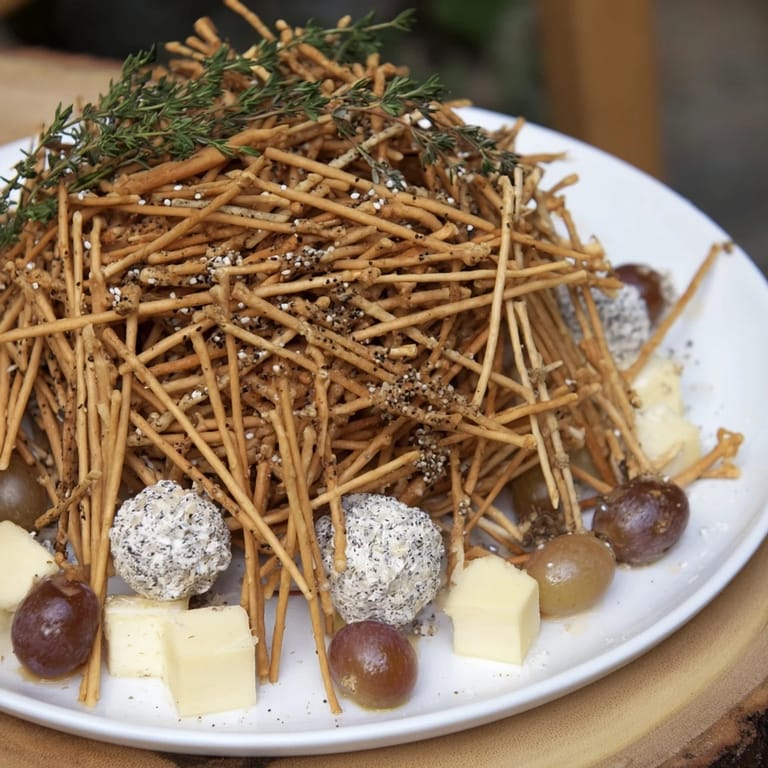
The moment you bring this to the table, it becomes the centerpiece of the evening—conversation pauses, cameras come out, and suddenly your appetizer is the most memorable part of the meal. I've learned to set it in the center of the table about 15 minutes before serving so guests can admire it, and then I stand nearby to help people understand how to deconstruct it without the whole thing tumbling down (which, thankfully, has never happened when assembled correctly).
- For extra drama, paint some breadsticks with edible gold leaf before baking for a truly luxe effect.
- Have small plates and napkins ready—cheese melts on fingers, and honey drips in ways you don't anticipate.
- Serve with crisp white wine or Champagne, which cuts through the richness perfectly and makes everything feel celebratory.
 Save
Save The Gilded Cage is proof that entertaining doesn't require complicated techniques—it requires thoughtfulness, quality ingredients, and a willingness to have fun with your food. Make this when you want to feel like a confident cook and watch your guests remember this moment long after the last crumb is gone.
Kitchen Guide
- → How do I ensure the breadsticks are crisp and golden?
Brush the breadsticks lightly with egg yolk before baking and bake at 200°C (390°F) for 15-18 minutes, turning once to ensure even color and crispness.
- → Can I substitute the cheeses in the dome?
Yes, you can personalize the selection with alternatives like aged cheddar, Manchego, or Taleggio to suit your taste.
- → What is the best way to assemble the breadsticks dome?
Arrange the breads sticks gently over the cheese mound, pressing slightly into the cheese or using a bowl as a mold for stability during assembly.
- → Are there any recommended accompaniments for this dish?
Seedless red grapes, honey or fig jam, and fresh herbs like thyme or rosemary complement the cheese and breadsticks beautifully.
- → Is there a way to make this dish gluten-free?
Use a gluten-free breadstick mixture to replace the traditional dough, ensuring the rest of the ingredients are gluten-free as well.