 Save
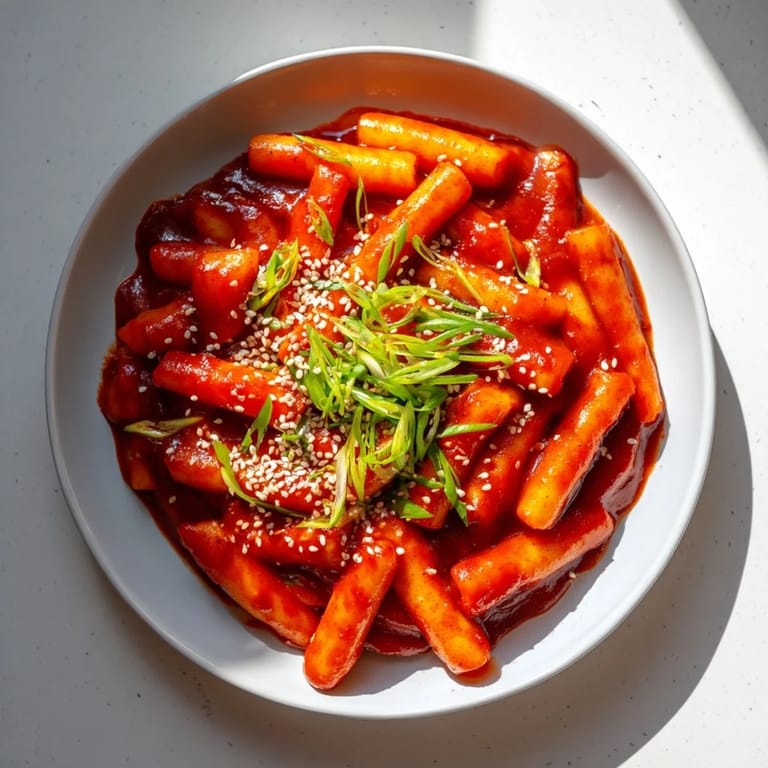
Save The first time I ate tteokbokki from a street vendor in Seoul, I burned the roof of my mouth on the first bite, but I couldn't stop eating. There's something about those chewy rice cakes swimming in that fiery-sweet sauce that makes you keep going back for more, even when you know better. Now whenever I make it at home, I'm transported back to that moment—the steam rising off the pot, the smell of gochujang and garlic filling the tiny stall, the pure joy of discovering a dish that would become one of my favorites.
I made this for my roommate on a cold Tuesday night when she was stressed about exams, and watching her face light up after the first bite made me realize cooking isn't really about feeding people—it's about telling them they matter. She's never been the same about Korean food since.
Ingredients
- Korean rice cakes (500 g): These chewy cylindrical cakes are the heart of the dish, and they absorb the sauce beautifully if you give them time to soften.
- Gochujang (3 tbsp): This fermented chili paste is where all the magic happens—it's complex, slightly sweet, and has a depth that raw chili just doesn't match.
- Gochugaru (1 tbsp): The flakes add that extra kick and a gorgeous red color that makes the dish irresistible.
- Soy sauce (2 tbsp): This anchors the flavors and keeps the sauce from being one-note spicy.
- Sugar and honey (1 tbsp each): Together they balance the heat and create that signature sweet-savory-spicy trinity that defines tteokbokki.
- Garlic (2 cloves, minced): Fresh garlic wakes up the entire sauce and adds a sharpness that mellows beautifully as it simmers.
- Broth base: Kelp and anchovies (or just kelp for vegetarian) create an umami-rich foundation that lifts everything else.
- Green onions and sesame seeds: These are your finishing touches—green onions bring brightness and sesame seeds add a nutty richness.
Tired of Takeout? 🥡
Get 10 meals you can make faster than delivery arrives. Seriously.
One email. No spam. Unsubscribe anytime.
Instructions
- Prepare your rice cakes:
- If your rice cakes are hard or straight from the fridge, soak them in warm water for about 10 minutes—they'll soften just enough to cook evenly without falling apart. This small step makes all the difference in texture.
- Build your broth:
- In a medium pot, bring water, kelp, and anchovies to a gentle simmer for 10 minutes, then remove the solids and keep the fragrant, savory liquid. You're basically making a quick dashi that carries all the umami the sauce needs.
- Make the sauce:
- Add gochujang, gochugaru, soy sauce, sugar, honey, and minced garlic to your broth and stir until everything dissolves into a smooth, glossy sauce. Take your time here—lumps of gochujang won't break down once the rice cakes go in.
- Combine and simmer:
- Add the drained rice cakes, onion, and cabbage to the pot and bring it to a gentle boil, stirring now and then to make sure nothing sticks to the bottom. The sauce will gradually thicken as the rice cakes release their starch, creating this almost creamy coating.
- Cook until perfect:
- Let it bubble away for 10 to 15 minutes until the rice cakes are soft and chewy and the sauce has the consistency of loose gravy. Taste and adjust—if you want it spicier, add more gochugaru; if you need more depth, a splash more soy sauce helps.
- Finish with brightness:
- In the last couple of minutes, stir in your green onions and boiled eggs if you're using them, so they warm through without losing their fresh quality. The green onions especially should still have a bit of snap.
 Save
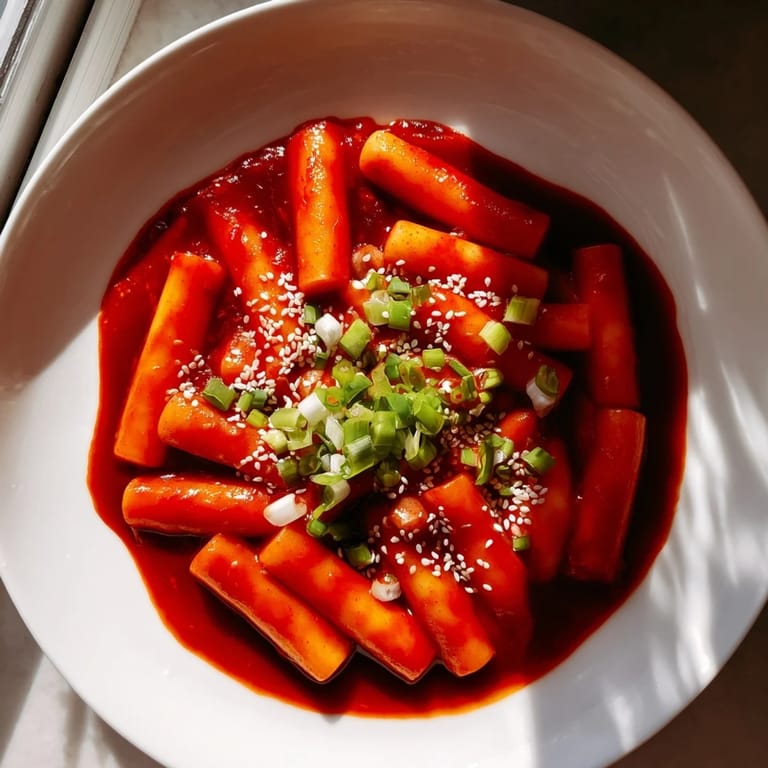
Save There's a moment, right around minute 12 of simmering, when the whole kitchen smells like gochujang and garlic and the sauce starts to coat the rice cakes in this glossy, irresistible way—that's when I know everything's going to be delicious. It's a small thing, but it never fails to make me smile.
The Right Texture Matters
Tteokbokki isn't supposed to be soupy or dry—it lives in this beautiful middle ground where the sauce coats the rice cakes but still pools slightly at the bottom of your bowl. If you add too much liquid, you lose that cling; too little and the cakes dry out. I learned this the hard way after making it watery once, and now I add liquid in stages and adjust as I go, tasting and adjusting the consistency as the cakes release their starch.
Make It Your Own
This is a recipe that genuinely welcomes additions without losing its soul—fish cakes, vegetables, even a fried egg on top all belong here. I've added crispy mushrooms, thrown in leftover vegetables, and even made it with a tiny bit of sesame oil drizzled on top. The structure is strong enough that you can play with it, and that flexibility is part of why I come back to it again and again.
Serving and Pairing
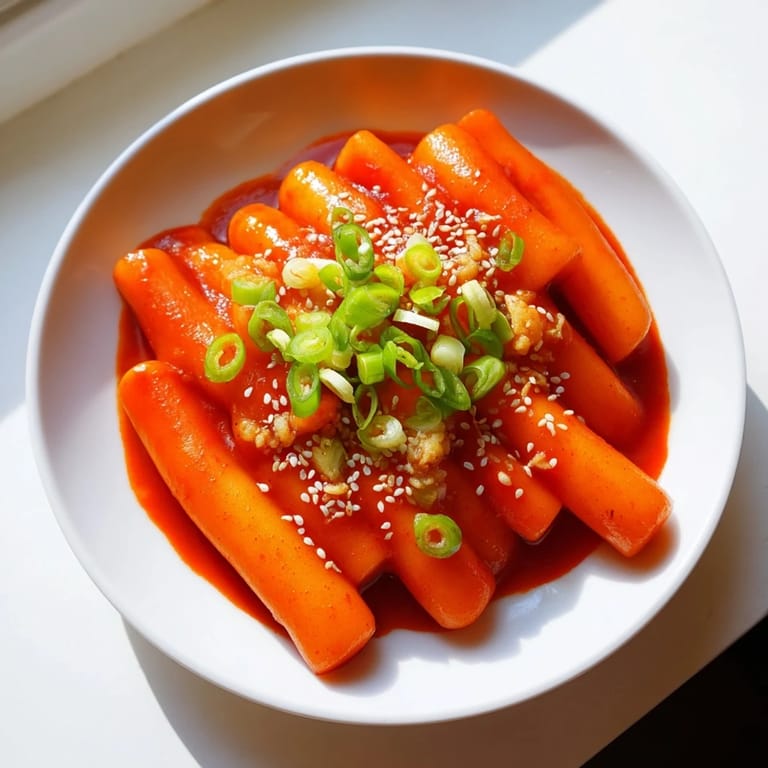
Tteokbokki tastes best served immediately in a warm bowl, ideally while the sauce is still glossy and the rice cakes are at their chewiest. It pairs beautifully with pickled radish, which cuts through the richness, or with steamed dumplings if you want to make a whole meal. A cold drink is essential—the spice builds, and you'll want something cool and refreshing to balance it.
- Serve in small bowls with chopsticks and a spoon for the sauce.
- Have pickled radish or a cooling side dish ready to go.
- Make sure everything is piping hot when you serve it—cold tteokbokki loses its charm.
 Save
Save Every time I make tteokbokki, I'm reminded that the best dishes are the ones that bring people together, that comfort you without trying too hard. This one does all of that and asks for almost nothing in return.
Kitchen Guide
- → How can I soften chewy rice cakes before cooking?
Soak the rice cakes in warm water for about 10 minutes if they are hard or refrigerated. This helps them become tender and ready to simmer.
- → What gives the sauce its signature spicy and sweet flavor?
The sauce combines gochujang and gochugaru for heat, balanced by sugar and honey to create a harmonious spicy-sweet taste.
- → Can I make this dish vegetarian-friendly?
Yes, by omitting anchovies in the broth and using kelp alone, the dish suits vegetarian preferences while maintaining umami depth.
- → What are good garnishes to enhance flavor and presentation?
Sliced green onions and toasted sesame seeds add freshness and a nutty crunch, elevating both taste and appearance.
- → How do I adjust the spiciness level?
Modify the amount of gochugaru (chili flakes) to increase or decrease heat according to your preference.